 dgbaking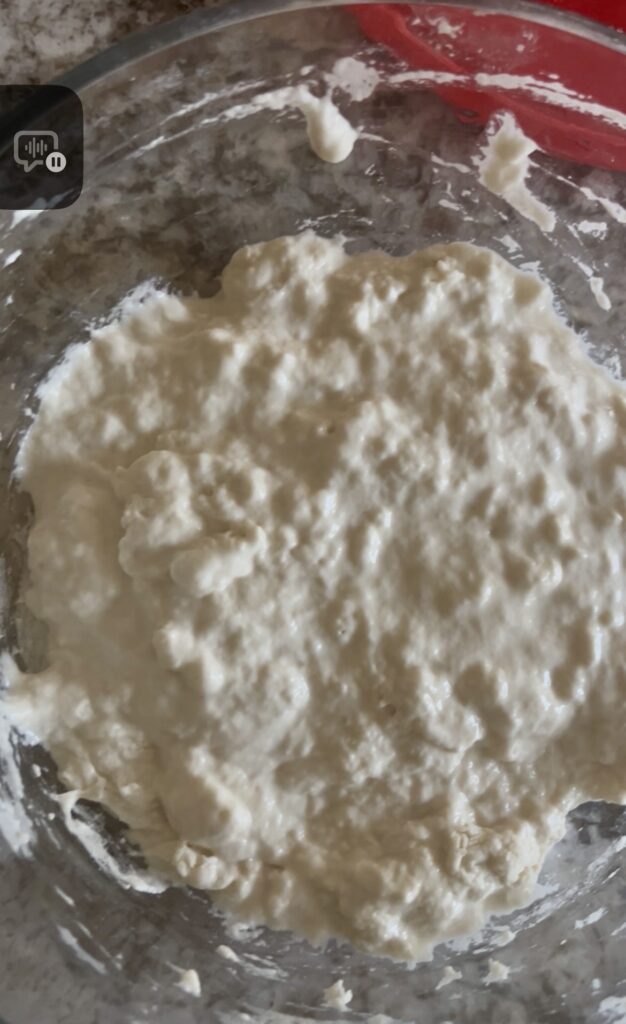
What is a poolish? A poolish is a preferment, very similar to a sponge, and it can be used on breads or pizzas. A poolish is a preferment that needs to be made hours in advance so that you give this starter time to develop. It goes by an equal 1:1 ratio of flour and water and just a bit of yeast, a pinch really, about 1/8 to 1/4 of a tsp.
An equal amounts of flour, hydration, such as water, and a pinch of yeast, must be mixed well together and placed in an airtight container, to ferment for 5-8 hours at room temperature. After the time passes, you refrigerate your container for hours, until you are ready to bake, not exceeding 24 hours, if possible. Some have left their poolish to ferment in fridge for up to 3 days, with no issue but do make sure that no strong acetone smell has developed or mold.
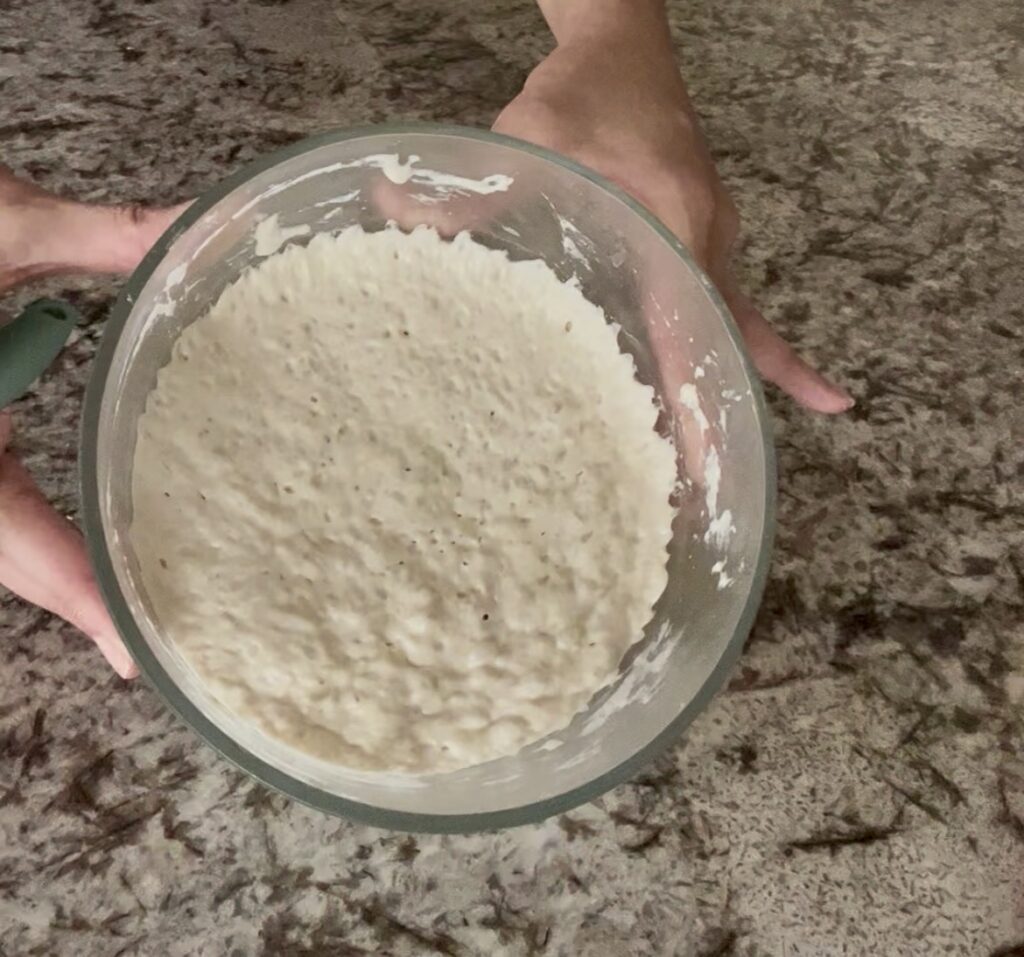
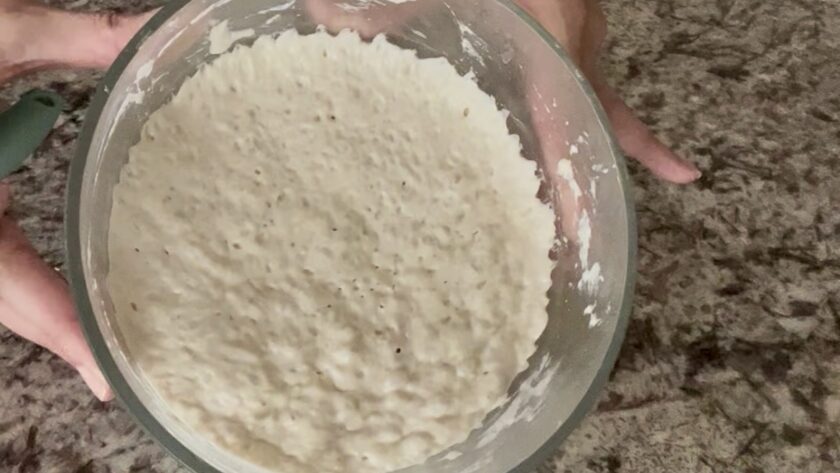
A poolish at first, is shaggy when mixed. Once its given time to be fermented, it becomes more hydrated, bubbly and wiggly. It also smells stronger though not unpleasant. An acetone smelling poolish has spoiled.
What a poolish does is first, adds a delicious nutty flavor to dough so that is basically enhances flavor. It adds a softness to a bread crumb and the acid build up that develops during fermentation acts as a natural preservative to breads-so that they stay fresher longer. This is actually what so many bakeries use to enhance their doughs, build flavor and natural preservation.
To calculate a poolish, you need to take a certain amount out of the flour and divide that amount by the total amount of flour used for the recipe. You also should make sure to not exceed 50% of that amount. An ideal percentage of poolish for bread is 20%-50%. For example:
I use 615g of bread flour for my Pan Sobao recipe- and that’s the total amount of flour
I take out 120g from the from the total amount of flour used for my pan sobao recipe, for the poolish
I divide 120/615=20%
That means I am using 20% of poolish for my pan sobao recipe. Once I remove the 120g of flour, I am left over with 495g to add to the recipe later on.
Now we move on the water or hydration. So that you want the ratio of flour to hydration to be 1:1. That means I am using 120g of water or hydration, for the poolish. This pan sobao recipe has a total of 350g of water so that:
I remove 120g of water for poolish
350-120=230
That means I am left over with 230g of water for the rest of the recipe, after I remove 120g for the poolish.
The total amount of yeast that you use for a poolish is just a pinch. I never exceed more than 1/8-1/4 tsp for any recipe or any amount of flour used in poolish.
A poolish is perfect for breads that are supposed to have a soft crumb in the first place, pan sobao, Italian bread, sandwich bread, baguettes and so on. It should not be confused with a sponge, which is very similar to a poolish in that it uses a 1:1 ratio of flour to hydration but doesn’t need as long pre-fermentation time as a poolish since it uses more yeast. A sponge is also best for breads that are enriched and I will go into more detail on different pre-fermentations at another time.
Making a pre-fermentaiton is time consuming in that you cannot bake a bread that same day. It is worth it though, as it does enhance the final bread and makes it extra delicious.